Polarized vs. Non-Polarized Sunglasses for Golf: Which Do You Actually Need?
Here's the short answer: for golf, it depends on what's actually costing you strokes — glare or green-reading. If squinting through four hours of open fairway is the problem, polarized wins easily. If misread breaks on the green are the problem, non-polarized (or at least a non-polarized amber tint) is the safer bet. Golf is the one sport on this blog where "just get polarized" doesn't automatically apply.
WHAT POLARIZATION ACTUALLY DOES
Light bouncing off a flat, reflective surface gets organized into glare — a horizontal band of reflected light that washes out detail. A polarized lens has a filter tuned to block light oriented that way, cutting glare off cart paths, water hazards, and wet fairways so colors and contours look sharper. That part's identical to fishing or driving. Golf's twist is the green: reading a putt often depends on picking up faint sheen and color variation in the grass that shows grain and moisture direction — and that's exactly the kind of reflected light a polarized lens is designed to remove. Cut the glare, and you can also cut the read.
WHEN POLARIZED WINS
Bright, open fairways. Four hours of sun bouncing off turf and cart paths is real eye fatigue, and that's where polarization does its best work — same reason it helps on the water.
Wet conditions. Morning dew, sprinklers, post-rain rounds — glare off standing water and slick surfaces is worse than dry-day glare, and polarized lenses handle it better than any tint alone.
Tee shots and approach play. Tracking a ball against a bright sky or picking out a flag in full sun benefits from cut glare, and that's most of the shots you'll hit in a round.
WHEN NON-POLARIZED IS FINE
Green-reading is where a lot of golfers back off polarized lenses entirely. Some players find that the same glare a polarized lens removes is actually part of how they judge grain direction and subtle breaks — take it away and the green can look flatter and harder to read. If your scoring lives and dies on the greens, a non-polarized lens with a contrast-boosting tint (or just taking your shades off before you putt) is a legitimate strategy, not a compromise. It's also the simpler, cheaper option if you're mainly after UV protection and a bit of contrast rather than max glare-cutting.
LENS COLOR FOR THE COURSE
Brown/amber: the contrast pick. Boosts the definition between grass, sand, and ball against a green backdrop — the most popular tint for golf specifically, polarized or not.
Grey/smoke: true color, lower contrast boost. Best for bright, sunny rounds where you just want glare cut without shifting how the course looks.
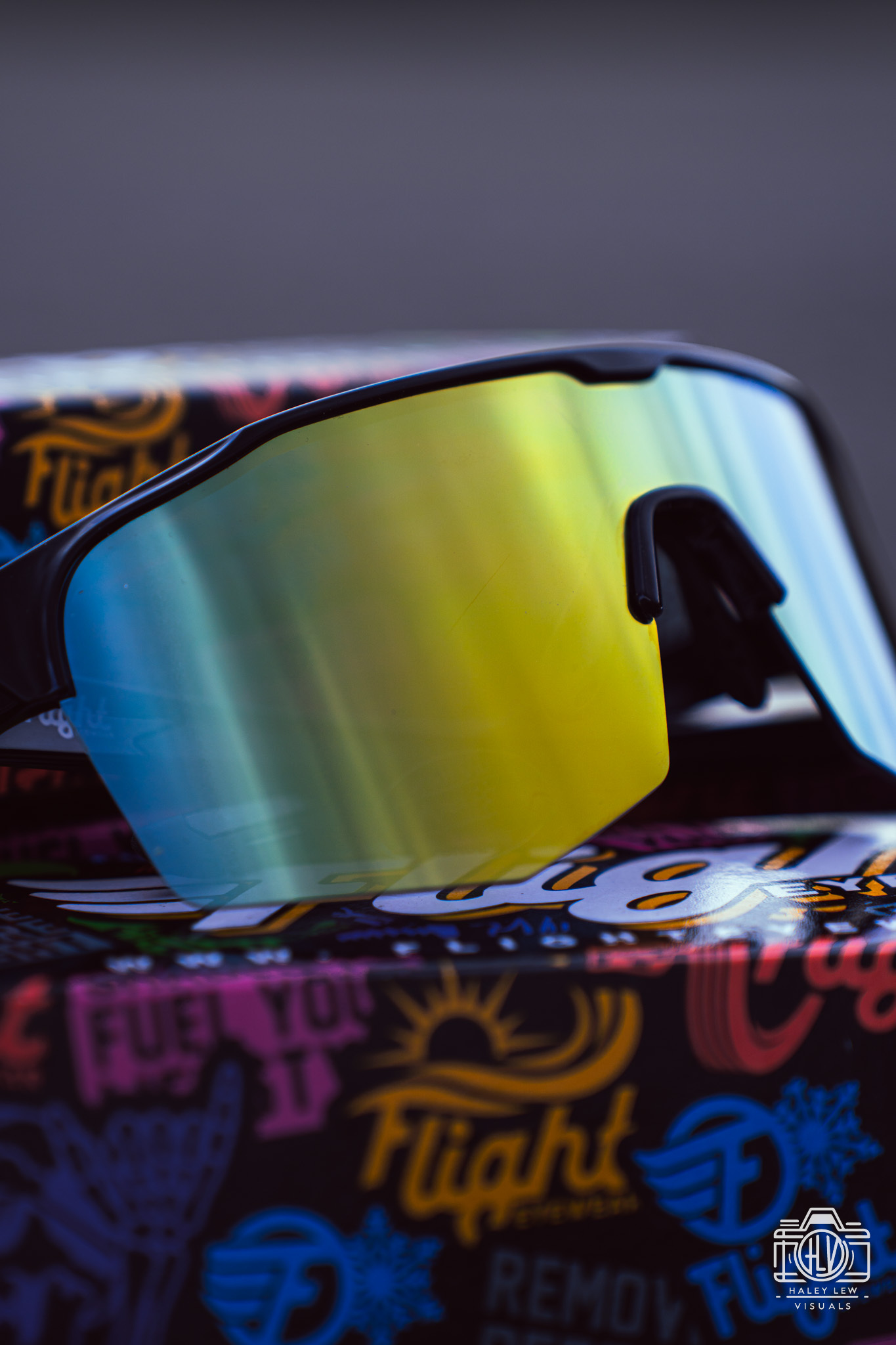
Mirror coatings (like our Accelerator's gold shield): cut brightness and add a bit of glare reduction without full polarization, which is why they're a common choice for players who want the greens to stay readable.
THE UNDER-$60 ANSWER
We carry both sides of this tradeoff, honestly labeled. Our Apex comes in genuinely Polarized Brown and Polarized Smoked lenses ($59) on an impact-resistant, UV400 square frame — the pick if you're playing bright, open courses and want glare gone. If you'd rather keep every bit of green-read intact, our Accelerator sport frame ($55) runs a gold mirror-shield lens that's UV400 protected but not polarized — full coverage and brightness control without touching how the greens look. Neither one is the "right" answer for every golfer. That's the point.
Both are covered by our warranty, both ship free on orders over $50, and right now Buy 2, Get 1 Free is running site-wide — so you can run polarized for the front nine mood and non-polarized for the greens without paying full price twice. Shop the lineup here.
Recent Posts
-
Polarized vs. Non-Polarized Sunglasses for Golf: Which Do You Actually Need?
Here's the short answer: for golf, it depends on what's actually costing you strokes — glare or gree …Jul 30th 2026 -
Polarized vs. Non-Polarized Sunglasses for Fishing: Which Do You Actually Need?
Here's the short answer: if you fish, polarized lenses are the one sunglasses upgrade that's actuall …Jul 23rd 2026 -
Best Cheap Baseball Sunglasses: What to Look For Under $50
Baseball eats sunglasses. They get sat on in dugouts, dropped chasing foul balls, left on bleachers, …Jul 22nd 2026