
Motorcycle Riding Glasses That Don't Fog: What Actually Works
Ask any rider what makes them ditch a pair of glasses and it's rarely style. It's fog. You roll up to a light on a humid morning, your body heat hits the back of the lens, and suddenly you're navigating by memory. Here's why it happens and what actually fixes it — without gimmicks.
Why riding glasses fog in the first place
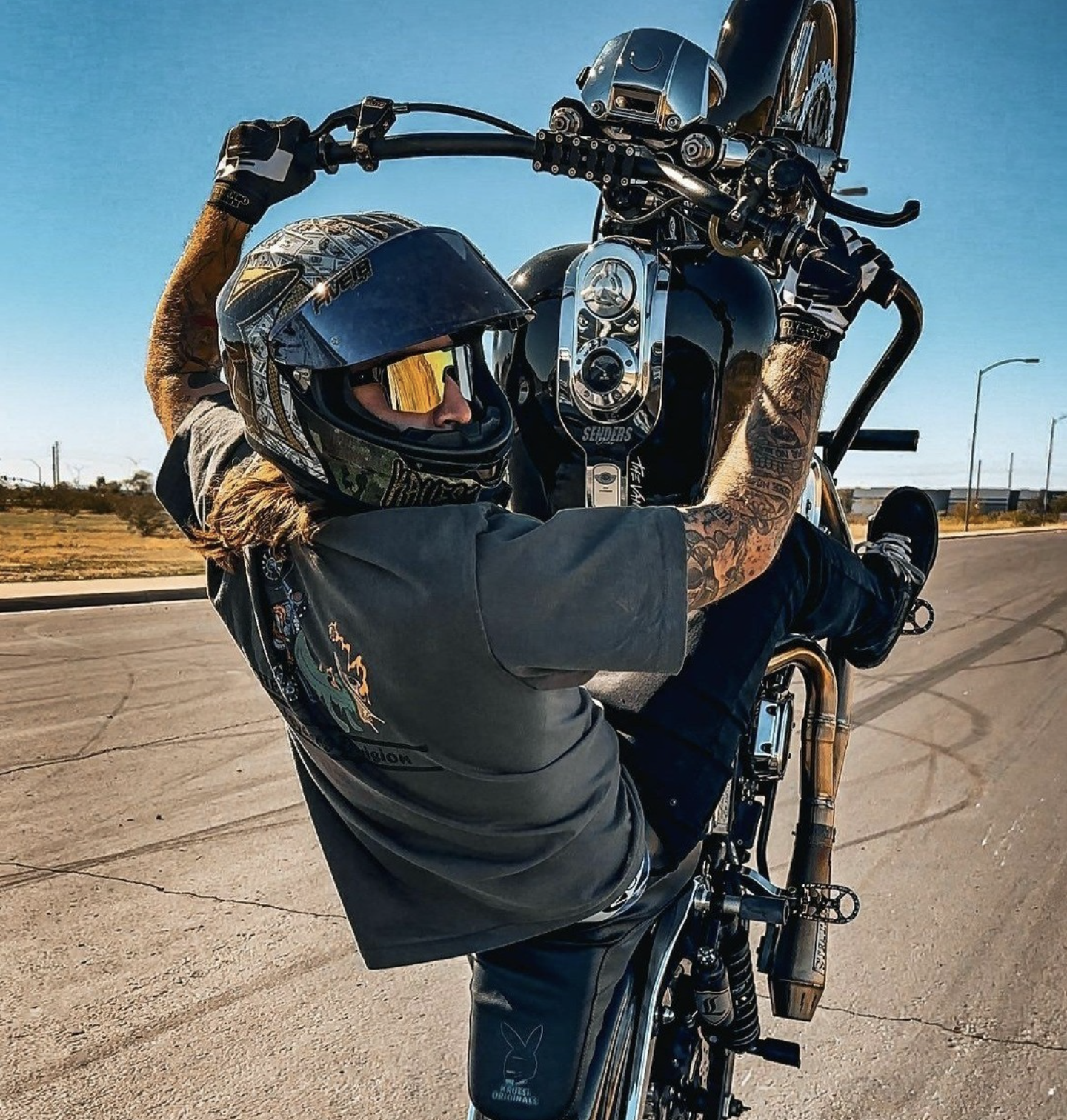
Fog is just condensation: warm, humid air (your face, your breath, your sweat) meeting a lens that's cooler than the air around it. On a motorcycle you get the worst-case setup — a helmet trapping heat around your face, stop-and-go traffic killing your airflow, and temperature swings every time you drop from highway speed to a stoplight. If your glasses sit tight against your face with nowhere for air to move, they will fog. Physics doesn't care what you paid for them.
What actually works
1. Airflow beats coatings
Anti-fog sprays and wipes wear off — usually right about the time you need them. The fix that never wears out is airflow. Frames with a semi-rimless design or a little standoff from your face let moving air sweep moisture off the lens before it beads up. Our Accelerator sport frames are built this way on purpose: full coverage up top where you need wind protection, open at the bottom so air keeps moving at street speeds.
2. A nose pad that holds its position
Fogging gets worse when glasses slide down your nose and close the air gap. Sweat makes cheap frames creep. The Accelerator uses TPR rubber nose pads and anti-slip arms, so the frame stays where you set it — keeping that ventilation gap consistent instead of sinking onto your cheeks a mile into the ride.
3. Stop feeding the lens warm air
Small habit changes matter: crack your visor at stops, don't exhale upward, and get moving again before you cook inside the helmet. If you run a half helmet, position your glasses so the arms sit under the helmet straps — it keeps the frame from being pressed flat against your face.
4. Match the lens to the light, not the fog
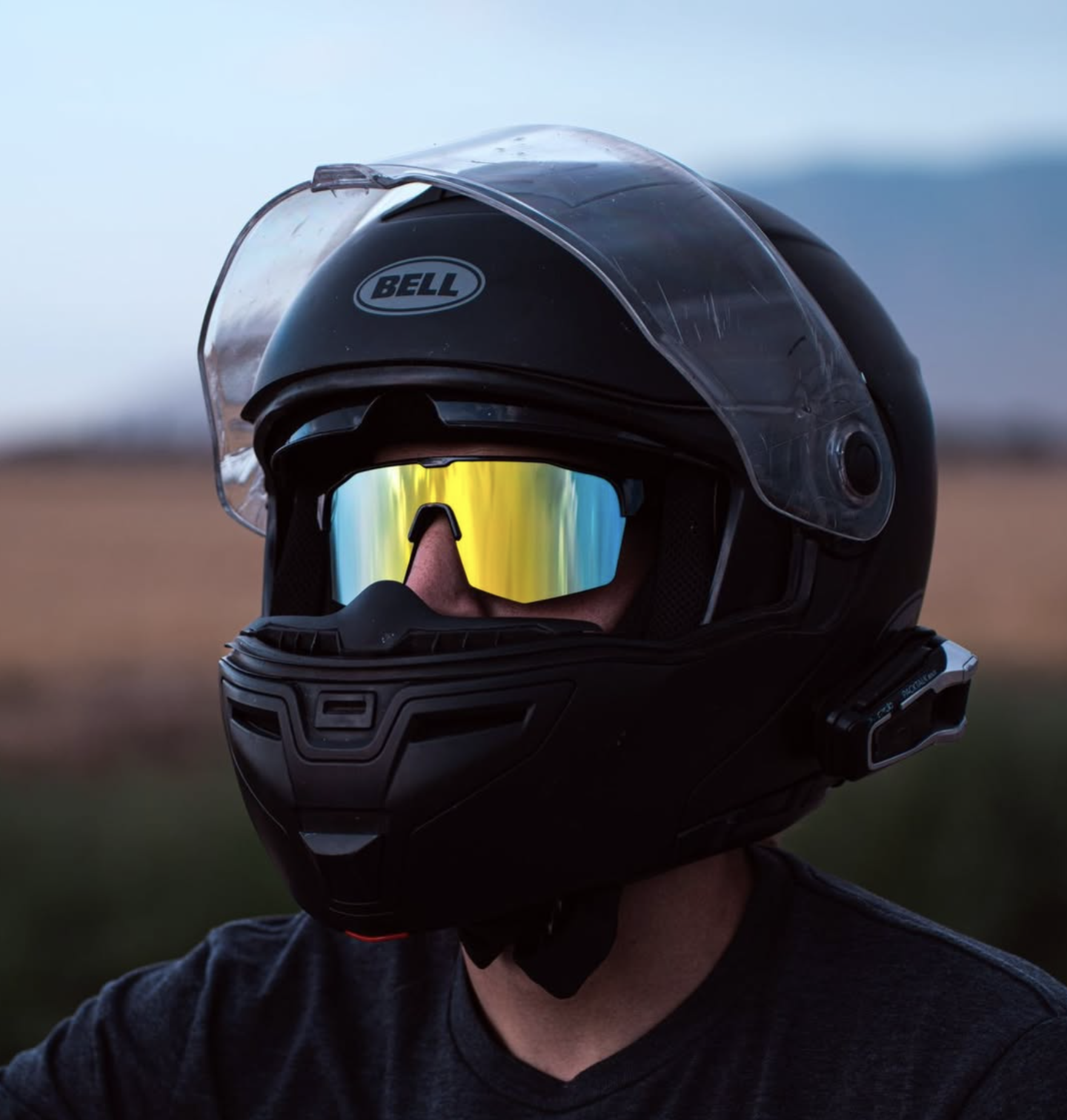
Riders often buy the darkest lens they can find, then flip them up at dusk and ride home squinting into the wind — watering eyes fog helmets too. A transition lens that darkens in sunlight and clears up as light drops means you keep protection on your face for the entire ride instead of trading fog for wind-blast.
What to look for in riding glasses
- Impact-resistant, UV400 lenses. At 60 mph, a june bug is a projectile. Your glasses are safety equipment first.
- Full top coverage, ventilated bottom. Blocks wind and debris where it comes from, breathes where it doesn't.
- Grippy contact points. Rubber nose pads and arms that don't turn slick with sweat.
- A frame that survives being dropped. Every rider's glasses hit the pavement eventually. Ours are covered by a warranty because we expect them to get used like riding gear, not jewelry.
The short version
Skip the miracle sprays. Buy a frame that's designed to breathe, stays put on your nose, and runs a lens you can wear from morning humidity to sunset. That's the whole trick. Flight started as the house eyewear brand of Deadbeat Customs, so everything we make is built around one question: does it work on a motorcycle? If it works there, it works everywhere else.
Shop the full lineup here — and if you're new to picking riding shades, start with our guide to the best sunglasses for motorcycle riders.
Recent Posts
-
Polarized vs. Non-Polarized Sunglasses for Golf: Which Do You Actually Need?
Here's the short answer: for golf, it depends on what's actually costing you strokes — glare or gree …Jul 30th 2026 -
Polarized vs. Non-Polarized Sunglasses for Fishing: Which Do You Actually Need?
Here's the short answer: if you fish, polarized lenses are the one sunglasses upgrade that's actuall …Jul 23rd 2026 -
Best Cheap Baseball Sunglasses: What to Look For Under $50
Baseball eats sunglasses. They get sat on in dugouts, dropped chasing foul balls, left on bleachers, …Jul 22nd 2026